AVB, or Audio Video Bridging, is a networking technology that has revolutionized the way we manage and interact with audio and video data. Developed by the Institute of Electrical and Electronics Engineers (IEEE) as a suite of standards, AVB enables precise synchronization, low latency, and high-quality streaming of audio and video across Ethernet networks. By leveraging AVB technology, your professional audio and video systems can now achieve optimal performance and reliability over a single network infrastructure.
In this article, we will explore the nuances of AVB Audio, comparing it with other prevalent audio networking technologies like Dante, unraveling its unique features, and discussing what it takes to implement it into a networked system. Our aim is to demystify AVB Audio and provide you with a clear understanding of how it fits into the larger picture of audio networking.
So, let’s dive into the world of AVB Audio and discover what makes it a pivotal technology in modern audio networking.
TABLE OF CONTENTS
Fundamentals Of AVB
AVB Protocols And Standards
AVB (Audio Video Bridging) is a set of technical standards that allow for real-time audio and video transmission over Ethernet networks. AVB protocols aim to provide consistent, high-quality performance by ensuring low latency and managing bandwidth effectively. The major protocols involved in AVB include IEEE 1722 and IEEE 802.1Qat.
- IEEE 1722: This standard defines the transport protocol you use for audio and video over Ethernet. It ensures the packetization, synchronization, and transportation of time-sensitive data.
- IEEE 802.1Qat: Also known as the Stream Reservation Protocol (SRP), this standard helps reserve network resources to guarantee the quality of service for audio and video streams.
Other supporting protocols are the Precision Time Protocol (PTP) that provides clock synchronization and IEEE 802.1AS that offers advanced timestamping methods.
The Role Of Ethernet In AVB
Ethernet, a popular networking technology, is an integral part of AVB audio networking. One of the key benefits of using Ethernet in AVB is that it enables communication across a range of devices with diverse capabilities. Thanks to standardized protocols and continuous improvements, Ethernet’s functionality has been extended to cater to the audio networking requirements.
In AVB, Ethernet serves as the foundation for transmitting audio and video data. The prioritization of time-sensitive data and efficient resource allocation are crucial for ensuring optimal performance in AVB networking. Therefore, the deployment of AVB protocols over Ethernet paves the way for high-quality, reliable connections with minimal latency.
AVB Network Configuration
Setting Up An AVB Network
To set up an AVB network, you first need to ensure that you have the necessary equipment. This includes AVB-compatible devices, AVB-compatible switches, and Ethernet cables. Next, you should plan your network topology, such as how many devices and the number of hops between them.
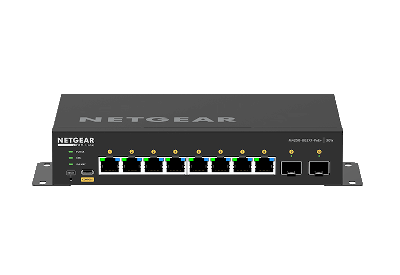
AVB Switch Requirement: AVB networks require AVB-compatible switches for proper operation. These switches support features like Stream Reservation Protocol (SRP) for reserving bandwith for audio streams, and Precision Time Protocol (PTP) for device synchronization.
- Connect Devices: Using Ethernet cables, connect your AVB-compatible devices to the AVB-compatible switch.
- Device Configuration: Utilize AVB Configuration and Enumeration for Media over Ethernet (AVDECC) to manage and configure your devices. This protocol helps in managing the AVB traffic and device networking.
- Synchronization: Ensure PTP helps in the synchronization of devices, allowing for accurate audio stream playback and recording.
- Optimization: Be mindful of the network traffic and optimize the number of hops between devices to minimize latency and potential data loss.
Best Overall
Netgear M4250-8G2XF-POE+
AVB Device Configuration & Routing
To configure your AVB devices, you’ll need to use AVDECC, which allows you to control and monitor AVB devices on the network. With AVDECC, you can manage the connections between devices, as well as the AVB traffic being sent and received.
Another common option for making routes is using the software provided by the AVB devices. For example, multiple Biamp Tesira Fortes will make the AVB routes for you assuming you setup the design file correctly. Overall, if the network is setup right, then device configuration and routing is a breeze!
Synchronization And Timing
Clock Synchronization Mechanisms
AVB audio relies on precise synchronization between devices in a network to ensure accurate and timely delivery of audio data. One vital aspect of AVB networks is the implementation of clock synchronization mechanisms. The primary protocol used in AVB networks is the Precision Time Protocol (PTP), specifically the IEEE 802.1AS-2020 standard, also referred to as gPTP.
In gPTP, a grandmaster clock is established within the network, and all devices synchronize their local clocks with the grandmaster. This synchronization ensures that all devices share a common time reference.
Managing Timing And Latency
When it comes to managing timing within an AVB network, several elements play crucial roles:
- Minimum latency is achieved through the use of Quality of Service (QoS) mechanisms that prioritize audio data and allocate network resources accordingly.
- Redundancy adds reliability to the network by providing alternative paths for audio data in case of link failures.
- Precise synchronization of all devices ensures correct timing of audio streams and enables multiple devices to work in harmony.
To help understand the critical components in AVB networks, consider the following table:
| Component | Description |
|---|---|
| Clock | Centralized time reference for all devices |
| Streams | Audio data transmitted between devices |
| Timing | Synchronization of data between devices |
| gPTP | Protocol used for precise clock synchronization |
| Grandmaster | Master clock providing a time reference |
| Quality of Service | Mechanisms for prioritizing audio data |
| Redundancy | Alternative paths to ensure reliable data transmission |
Compatibility And Interoperability
Manufacturer-Specific Implementations
Each manufacturer tends to have their own unique approach to implementing Audio Video Bridging (AVB). Popular brands such as PreSonus, MOTU, and Yamaha have developed their own AVB compatible products, including networked audio systems, mixing desks, and audio interfaces. Although AVB offers a standardized set of protocols, it is crucial to ensure that your chosen AVB equipment aligns with the specific manufacturer’s implementation guidelines.
Some popular manufacturer-specific AVB implementations are:
- PreSonus: StudioLive AVB series
- MOTU: AVB Switch and various AVB audio interfaces
- Yamaha: AIC128-D and AIC128 cards for CL/QL series mixing consoles
Interfacing With Non-AVB Systems
There may be instances when you need to interface your AVB system with non-AVB systems using other audio over IP (AoIP) protocols, such as Dante. While AVB and Dante are both networked audio solutions, they differ in certain aspects, and integrating them might require specific solutions or compatibility devices.
For example, to connect your AVB-based PreSonus mixing desk to a Dante-based RME audio interface, you would require a bridge or a converter device that supports both protocols.
Below is a summary of some conversion options between AVB and other popular AoIP protocols:
| AVB | Non-AVB Protocols | Conversion Options |
|---|---|---|
| Dante | Audinate Avio Adapters, Biamp Tesira EX-UBT | |
| Livewire+ AES67 | Axia xNode, Ravenna Merging Technologies NADAC | |
| Q-LAN | QSC Q-SYS Core processor |
Related Article: What Is Dante Audio? The Merging Of IT And Sound
Advanced Topics In AVB
Network Design And Scalability
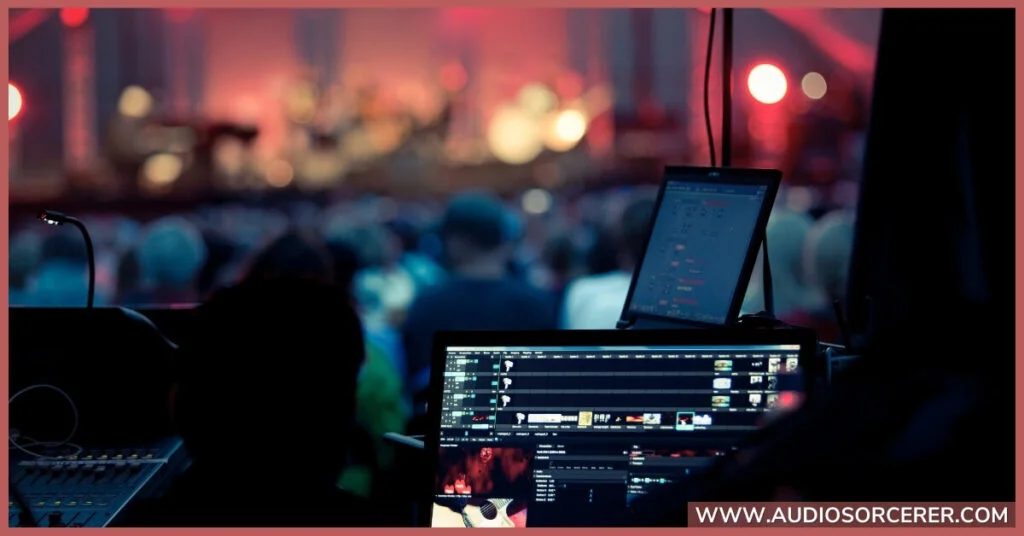
When designing your AVB network, it’s crucial to consider the scalability and topology of the system. Selecting the appropriate Ethernet switch ensures optimal performance and reliability, especially for real-time audio applications such as live sound.
To achieve a scalable AVB network, consider the following factors:
- Channels: Determine the number of audio channels you need for your network, making sure to allocate enough bandwidth for all devices connected.
- Priority: Assign priority levels to different types of data streams, ensuring your real-time audio and video data gets priority over other non-critical data.
- Multicast: Make use of multicast techniques to efficiently distribute audio and video streams to multiple devices simultaneously.
Moreover, AVB networks require management and setup of the IT network infrastructure to ensure proper synchronization, scheduling, reservation, and traffic shaping, all of which contribute to network reliability.
AVB In Different Applications
AVB technology is versatile and can be employed in various applications. Below is a list of where AVB is commonly used.
- Audio Recording
- Live Sound
- Conferencing Systems
- Broadcasting
Frequently Asked Questions (FAQs)
What is AVB audio and how does it work?
AVB, or Audio Video Bridging, is a set of open IEEE standards that enable the transmission of high-quality, low-latency audio and video over standard Ethernet networks. Unlike conventional network traffic that competes for bandwidth on a best-effort basis, AVB reserves a guaranteed portion of network bandwidth for time-sensitive audio and video streams, ensuring that the data arrives at its destination with consistent, predictable timing. This is achieved through a combination of three core IEEE standards — 802.1AS for network-wide clock synchronization, 802.1Qav for traffic shaping and bandwidth reservation, and 802.1Qat for stream reservation protocol — working together to create a deterministic, synchronized network environment purpose-built for professional audio and video transport. The result is a reliable, scalable audio networking solution capable of carrying hundreds of channels of audio over a single Ethernet cable with latencies as low as two milliseconds.
What is the difference between AVB and Dante audio networking?
AVB and Dante are both professional audio networking technologies designed to transport multi-channel audio over Ethernet, but they differ significantly in their underlying architecture, ecosystem, and practical implementation. AVB is an open IEEE standard built into the hardware of compatible network switches, meaning it requires AVB-capable switches to function and cannot run on standard off-the-shelf networking infrastructure. Dante, developed by Audinate, is a proprietary protocol that runs over standard IP networks using conventional unmanaged or managed switches, making it significantly easier to deploy in existing network environments without specialized hardware. Dante also has a substantially larger installed base and broader manufacturer support across the pro audio industry. AVB's advantage lies in its open standard foundation and its deterministic, hardware-level timing guarantees, but Dante's ease of deployment and ecosystem size have made it the more dominant choice in most commercial and touring audio applications.
What equipment do you need to set up an AVB audio network?
Setting up an AVB audio network requires three key elements — AVB-compatible audio devices, an AVB-capable network switch, and a method for configuring and managing stream connections. On the device side, any audio interface, stage box, amplifier, or mixing console that supports AVB will work, with manufacturers like MOTU, PreSonus, and Meyer Sound offering AVB-enabled products across a range of applications. The network switch is the critical infrastructure requirement that distinguishes AVB from protocols like Dante — standard consumer or enterprise switches do not support AVB, so a switch with hardware-level AVB support is mandatory for the network to function correctly. Apple's Thunderbolt displays and Mac computers have historically included built-in AVB support at the hardware level, making Apple-based setups particularly straightforward to configure. Connection management and stream routing is typically handled through dedicated software provided by the device manufacturer or through Apple's built-in Audio MIDI Setup utility on macOS.
What are the latency and channel count capabilities of AVB compared to other audio networking protocols?
AVB is capable of achieving latencies as low as two milliseconds across a network, which is competitive with other leading professional audio networking protocols and well within the threshold for live performance and broadcast applications. Channel counts over AVB are substantial — a single Gigabit Ethernet connection can carry up to 170 channels of uncompressed audio at 48kHz and 24-bit resolution, with exact channel counts varying depending on sample rate, bit depth, and the specific AVB implementation used by the hardware manufacturer. Compared to Dante, AVB's latency floor is similar in practical terms, though Dante's widespread adoption and flexible infrastructure requirements give it an edge in scalability across large, complex installations. For applications demanding absolute timing precision and hardware-guaranteed delivery — such as large-scale live sound reinforcement or broadcast — AVB's deterministic timing architecture offers a level of reliability that software-based protocols running over standard IP networks cannot technically guarantee in the same way.
Is AVB being replaced by newer audio networking standards, and is it still worth learning?
AVB remains a relevant and actively used standard, particularly in specific market segments, but the broader professional audio networking landscape has evolved considerably since AVB's introduction. Milan, a higher-level interoperability standard built on top of the AVB IEEE protocols, has emerged as the next evolution of the technology and is gaining meaningful traction in the live sound and installed audio markets with support from major manufacturers including d&b audiotechnik, L-Acoustics, Meyer Sound, and others. Milan addresses one of AVB's longstanding criticisms — the lack of guaranteed interoperability between different manufacturers' AVB implementations — by establishing a strict certification and compliance framework on top of the existing IEEE foundation. For anyone working in professional live sound, installed AV, or broadcast, understanding AVB and its relationship to Milan is genuinely valuable knowledge, as the technology underpins an increasing number of large-scale audio systems and represents the open-standard alternative to proprietary protocols in a market that has historically been dominated by them.
Final Thoughts
AVB audio is an amazing technology that offers significant benefits for so many audio applications. It enables efficient and high-quality transmission of audio data over Ethernet networks. By understanding its core principles and adopting relevant standards, you can unlock its full potential in your own audio systems.
If you found this guide helpful, please consider subscribing to our blog for more music production tips, product reviews, and buying guides.
“Some of the links within this article are affiliate links. These links are from various companies such as Amazon. This means if you click on any of these links and purchase the item or service, I will receive an affiliate commission. This is at no cost to you and the money gets invested back into Audio Sorcerer LLC.”