In audio production, you have an array of tools at your disposal, each designed to enhance and breathe life into your mixes. Among these, convolution reverb stands as a testament to technological sophistication within sound design. This type of reverb plugin isn’t your garden-variety effect; it’s a powerful space designer that employs actual audio files known as impulse responses (IR) to emit extraordinary realism within your projects. As you strive to achieve a sound that resonates with the palpable acoustics of real-world spaces, convolution reverb can transport your audio to the halls of famed venues or the intimacy of quirky, offbeat locations. To learn more about this amazing reverb, read on!
TABLE OF CONTENTS
Understanding The Basics Of Convolution Reverb
Convolution reverb is a popular mixing tool, transforming your tracks by infusing them with the essence of real space. At its core, convolution reverb is about authentically replicating the acoustics of various environments, giving life to the sounds within your mix.
What Is Convolution Reverb?
Imagine capturing the acoustic soul of any location—from the resonant chambers of grand cathedrals to the intimate corners of a home studio. Convolution reverb makes this possible by utilizing impulse responses (IRs), which are audio snapshots of the reverb tail of these spaces. This innovative technique allows a plugin to apply the complex reflection and reverberation patterns to an input signal, effectively transporting your audio into brand-new landscapes of sound.
The Role Of Impulse Responses In Convolution Reverb
An Impulse Response, or IR, is the linchpin in creating the distinctive characteristics of convolution reverb. These audio recordings are precision-crafted echoes from an impulse—like a snap or a blast—executed within a location. These IRs encapsulate the full spectrum reflection and reverberation inherent to the space where they were recorded. Plugin libraries like those in Audio Ease Altiverb are brimming with IRs from a plethora of spaces, offering an expansive palette to paint your sonic landscape.
Convolution Reverb Vs Algorithmic Reverb
Unlike algorithmic reverbs that craft their effects from mathematical algorithms, convolution reverbs don’t synthesize their acoustic profiles—they borrow from reality. The outcome is a reverb that doesn’t just mimic a real setting; it embodies it. Where algorithmic reverbs offer flexibility and control over the reverb parameters, convolution reverbs provide a depth and authenticity that comes from their audio DNA, directly cloned from the IRs of actual locales.
Related Article: Types Of Reverb Explained: From Plate To Hall And Beyond
The Process: Capturing Sound In Real Spaces

Imagine you are inside a sprawling cathedral, standing solemnly as a single snap resonates through the vast expanse. You’re not just hearing a noise; you’re witnessing the creation of an impulse response, a sonic snapshot of a room’s acoustic character. This is the first step in fabricating the authentic soundscapes that convolution reverb provides.
With a precision microphone at the ready, sound engineers capture the reflections and resonance unique to real space. These reflected sounds, rich with the space’s signature reverb tail, are distilled into an audio file that maps the acoustic fingerprint of a location.
At the heart of the convolution reverb’s magic lies the impulse response, an intricate audio profile that offers the power to recreate a sonic experience when applied to an input signal. The following list details the steps your audio takes on its journey from a single, dry signal to a full-bodied, reverberating experience:
- Capturing the initial impulse using starter pistol shots or hand claps to excite the space.
- A microphone meticulously records the ensuing sound, gathering every reflection and nuance of the resonance.
- The captured reverberations are then translated into a highly detailed impulse response.
- Through the convolution reverb plugin, this impulse response transforms any input signal, overlaying the captured space’s characteristics onto the original audio.
Convolution Reverb In Action: Practical Applications

By harnessing the power of real-world acoustic profiles, convolution reverb enables your work to resonate with listeners in a way that’s both intimate and lifelike. No longer do you need to rely on synthetic sounds to achieve the ambiance and decay you’re after—convolution reverb invites you to tweak and adjust audio with precision, crafting realistic spaces that enhance every project.
Immersive Soundscapes For Film And Video Games
Film and video game developers prize convolution reverb for its ability to create immersive environments that transport viewers or players into other realms. The reflection and resonance characteristic of a specific location can be convincingly replicated, providing audio that complements the visual narrative seamlessly.
Adding Depth To Music Production
Music producers utilize convolution reverb to enrich their sound with depth and warmth. Components like the reverb tail and decay are crucial in bringing instruments like guitars and vocals to life. By recreating spaces revered for their acoustic charm, artists achieve a sound quality that resonates on a deeper level.
The Value Of Convolution Reverbs For Sound Design
In sound design, the impact of convolution reverb extends beyond simple audio enhancement. It provides a breadth of auditory cues that give life to even the most mundane of sounds. Through the power to mirror real-world spaces’ acoustics precisely, it brings an unrivaled realistic space element to your creative output, distinguishing it in a crowded industry.
Convolution Reverb Plugins (Our Top Picks)
As an audio engineer or sound designer, your quest for realism and depth in audio mixes can lead you on a journey through various convolution reverb plugins. These tools are crucial in achieving the desired ambience and spatial effects that bring a mix to life. Let’s explore some of the best convolution reverb plugins that can become staples in your audio toolbox.
Audio Ease Altiverb
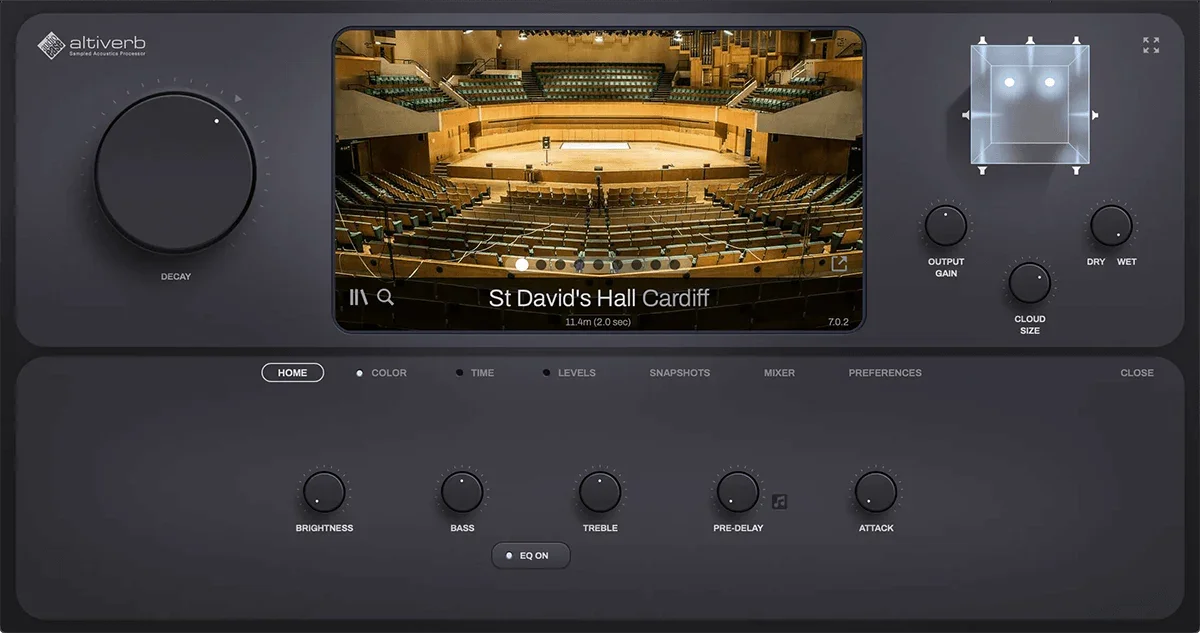
Known for its vast library of impulse responses,Audio Ease Altiverb offers you an extensive range of options from iconic concert halls to secret studios. Providing you with both stereo and surround sound capabilities, Altiverb caters to the needs of today’s audio professionals. Its intuitive interface allows for efficient modulation and tweaking, ensuring that you achieve the perfect reverberation for your tracks.
Revolver Convolution Reverb Native v7
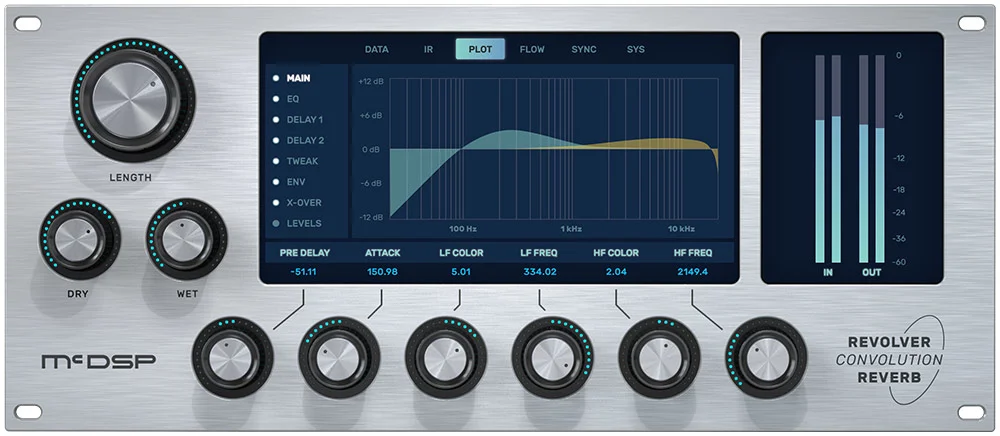
Revolver Convolution Reverb Native v7 stands out for its hybrid approach, combining the best of both convolution and algorithmic reverbs. Its powerful processing allows you to blend natural impulses with synthetic modulation, offering a unique level of control for your stereo and multichannel projects. This plugin is an excellent choice for sound designers seeking versatility without compromising on quality.
➡ GET the Revolver Convolution Reverb Native v7
Nugen Audio Paragon
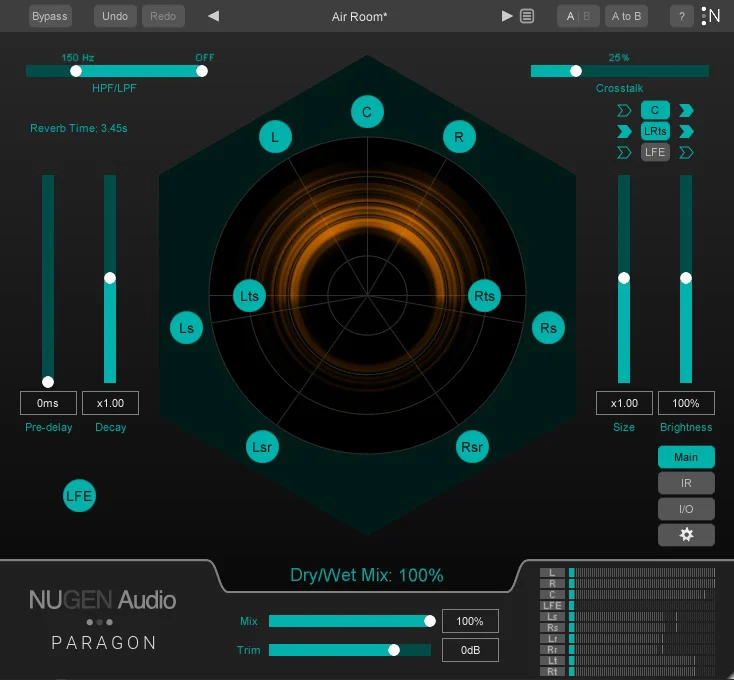
Distinguished by its re-synthesis technology, Nugen Audio Paragon takes convolution reverb to new heights, allowing for real-time changes in decay, room size, and brightness. Paragon offers unparalleled flexibility and realism, maintaining fidelity to the original sound spaces. It’s a standout plugin for those who require precise control and are eager to push the boundaries of sonic exploration.
- Unmatched Impulse Response Quality
- Surround Sound and Stereo Configurations
- Advanced Modulation Opportunities
- Impressive Realism and Room Emulation
Related Article: The Top 5 Best Reverb Plugins for Creating Space in Your Mixes
Frequently Asked Questions (FAQs)
What is convolution reverb and how does it work?
Convolution reverb is a type of digital reverb that reproduces the acoustic characteristics of a real physical space by using a recording called an impulse response (IR). An impulse response is captured by playing a short, sharp sound — like a sine sweep or a starter pistol — in a real environment such as a concert hall, church, or recording studio, and recording how that space responds to and decays the sound. The convolution reverb plugin then mathematically convolves — or multiplies — your dry audio signal with that impulse response, effectively placing your audio into the acoustic fingerprint of that recorded space. The result is one of the most realistic and natural-sounding reverbs available in digital audio production, because it is based on the actual physics of a real environment rather than an algorithmic approximation of one.
What is the difference between convolution reverb and algorithmic reverb?
Convolution reverb and algorithmic reverb represent two fundamentally different approaches to generating reverb in a DAW. Convolution reverb uses recorded impulse responses of real spaces to reproduce their exact acoustic behavior, which makes it exceptionally realistic and natural-sounding but also largely static — the space sounds the way it sounds, with limited ability to dramatically reshape or modulate it. Algorithmic reverb, by contrast, uses mathematical models and DSP algorithms to simulate the behavior of reverberant spaces, giving the engineer much greater creative flexibility — parameters like size, diffusion, modulation, and decay can be pushed well beyond what any real space would produce. Convolution reverb excels when realism and authenticity are the goal, while algorithmic reverb is the more versatile creative tool for sound design, music production, and situations where a specific real space isn't the priority.
What are impulse responses and where do you get them?
An impulse response is a audio recording that captures the acoustic signature of a specific space or device by documenting how it responds to a brief, broadband sound stimulus. In the context of convolution reverb, impulse responses can represent real physical environments — cathedrals, recording studios, stairwells, caves — as well as hardware reverb units, vintage plate reverbs, and spring reverbs. Most convolution reverb plugins ship with a library of impulse responses covering a range of spaces and devices. Beyond the included libraries, there is a large and growing ecosystem of third-party IR libraries available for purchase, and a number of high-quality free IR collections are available online from developers, universities, and audio communities. Players and engineers can also capture their own impulse responses using a measurement microphone, an audio interface, and freely available IR capture software.
Does convolution reverb use more CPU than algorithmic reverb?
Historically, convolution reverb was significantly more CPU-intensive than algorithmic reverb because the mathematical process of convolving two audio signals in real time is computationally demanding. Modern convolution reverb plugins have become considerably more efficient through optimized FFT processing and true stereo versus dual mono IR handling, but they can still place a heavier load on a system than a comparable algorithmic reverb — particularly when using long, high-sample-rate impulse responses or running multiple instances across a session. On a modern computer with a capable CPU, convolution reverb is rarely a practical bottleneck for most production workflows, but engineers working on older systems or large sessions with many tracks may find it more efficient to use convolution reverb on aux send channels rather than inserting multiple instances directly on individual tracks.
Can convolution reverb be used creatively, or is it only for realistic room simulation?
Convolution reverb is far more creatively flexible than its reputation as a realism tool suggests. While its most common application is placing audio into convincing real-world acoustic spaces, the same convolution process can be used with any impulse response — including those captured from unusual objects, mechanical spaces, vintage hardware, or entirely synthesized sources. Engineers and sound designers use convolution reverb with IRs captured from inside cars, inside instruments, in drainage pipes, and from guitar amplifier cabinets to create textures that would be impossible to achieve with a standard reverb plugin. Reversed impulse responses produce eerie, swelling pre-reverb effects. Pitch-shifted or time-stretched IRs yield spaces that don't exist in nature. Used experimentally, convolution reverb is one of the most powerful and underexplored creative tools in a producer's arsenal.
Final Thoughts
As you’ve discovered, convolution reverb is not just an enhancement but a revolution in audio production. This pioneering reverb plugin endows your projects with an extraordinary degree of realism that conventional reverbs cannot match. The palpable depth and space that can be added to music productions are invaluable, while the authentic soundscapes it affords film and game sound designers are unparalleled. It’s clear that this technology has become indispensable for anyone seeking to elevate their audio work.
If you found this guide helpful, please consider subscribing to our blog for more music production tips, product reviews, and buying guides.
“Some of the links within this article are affiliate links. These links are from various companies such as Amazon. This means if you click on any of these links and purchase the item or service, I will receive an affiliate commission. This is at no cost to you and the money gets invested back into Audio Sorcerer LLC.”