Ribbon mics have a sound that's hard to fake. Smooth on top, natural through the mids, and easy on the ears in a way that condensers don't always manage. They tame harsh sources beautifully — a screaming guitar cab, a bright trumpet, a room full of cymbals. Where a condenser might hand you all the brittle detail you didn't ask for, a ribbon rounds things off and just sounds right.
That's why engineers reach for them. Not because they're vintage or trendy, but because they handle high-energy, top-heavy sources with grace.
One thing to know before you buy: most ribbons are passive, which means they need a good preamp with plenty of clean gain to shine. A couple of the picks here are active and run on phantom power, which makes them a lot friendlier with budget interfaces. I'll flag which is which as we go.
TABLE OF CONTENTS
How we picked these ribbon mics
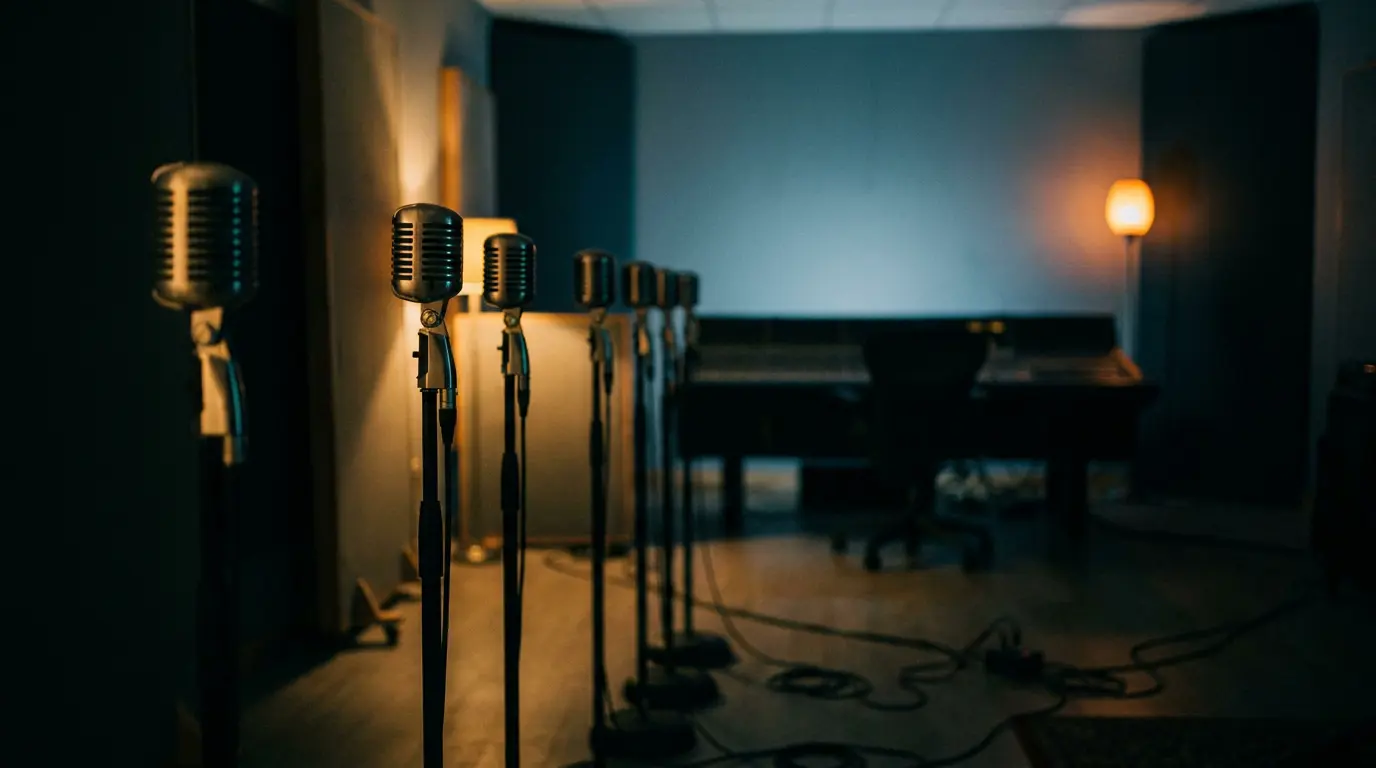
I judged these on the stuff that actually matters in a session: how they sound on real sources, how they're built, and whether you can trust them to show up and do the job day after day. A ribbon that sounds incredible but rattles apart after six months isn't a good mic. Reliability counts.
The five here run from a studio workhorse that's the standard everything else gets measured against, down to an accessible entry point for your first ribbon. There's a fit for different rooms and different budgets.
You'll see both passive and active mics on this list. Passive ribbons need a preamp with enough clean gain to drive them — feed them weak gain and you'll be fighting noise. Active ribbons have built-in electronics powered by +48V phantom, so they play nicer with modest preamps. If you want the deeper version of how that works, here's everything you need to know about phantom power.
Royer R-121 Studio Ribbon Microphone

#1
Best Overall
Royer R-121 Studio Ribbon Microphone
The Royer R-121 is the first-call ribbon for electric guitar cabs, full stop. Put it in front of a loud amp and it captures that thick, smooth, naturally rolled-off tone that made ribbons the go-to for cab miking in the first place. It's also fantastic on brass, drum rooms, percussion, and piano.
It's made in Burbank and built for daily working use — not babied, not handled with gloves, but used. Royer backs it with a lifetime warranty and the first re-ribbon free, which tells you how confident they are. There are tens of thousands of these on stands around the world, and there's a reason for that.
You'll also see a 25th Anniversary edition floating around. Worth being clear: it's the same mic underneath with a special finish, not a different product. If you want the backstory, Sound On Sound covered Royer's R-121 Anniversary launch. For tracking loud guitar amps specifically, it pairs well with the approaches in our guide to the best guitar amp mics.
Pros
- The benchmark ribbon for electric guitar cabs
- Excellent on brass, drum rooms, percussion, and piano
- Built in Burbank for daily working use
- Lifetime warranty with the first re-ribbon free
Cons
- Passive, so it needs a good preamp with plenty of clean gain
- It's the priciest option on this list
Beyerdynamic M 160 Double Ribbon Microphone

#2
Runner-up
Beyerdynamic M 160 Double Ribbon Microphone
The Beyerdynamic M 160 is a hand-built, made-in-Germany double-ribbon with a trick up its sleeve — a hypercardioid pattern. That's unusual for a ribbon, and it's genuinely useful when you need more isolation than the typical figure-8 gives you. Less spill, tighter focus.
It's a classic on guitar and brass, and it's the mic behind plenty of Hendrix-era guitar tones, if that's the world you're chasing. In 2023 Beyerdynamic refreshed the M-series with a new logo, stronger packaging, and a slightly updated look. The technology inside is the same, and it's still assembled by hand.
Honest heads-up: stock can be spotty at some retailers — one big one has had it listed as unavailable — but it's still a current product available through Beyerdynamic and others. If you're chasing it, it's worth being patient.
Pros
- Hypercardioid pattern gives more isolation than most ribbons
- Hand-built in Germany
- Classic, characterful tone on guitar and brass
- 2023 refresh keeps the same proven design inside
Cons
- Passive — wants a strong, clean preamp
- Stock can be intermittent at some retailers
Golden Age Project R1 Active MKIII Ribbon Microphone

#3
Top Pick
Golden Age Project R1 Active MKIII Ribbon Microphone
The Golden Age Project R1 Active MKIII delivers that large, mellow ribbon sound — smooth top end, extended low end — with a couple of handy switches: a low-cut and a 10dB pad. Being active is the headline here. The built-in electronics mean it works happily with budget preamps that would leave a passive ribbon starved for gain.
For the features and the sound you get, it's a strong value play. If you've got a modest interface and you want into the ribbon world without also buying a high-end preamp, this is an easy call.
A couple of notes for honesty's sake: supply can be intermittent, so you might have to wait on a restock. And there's a pricier Premier R1A sibling out there — that's a step-up variant, not a replacement for the MKIII.
Pros
- Active design works well with budget preamps
- Low-cut and 10dB pad switches add flexibility
- Smooth top, extended low end — proper ribbon sound
- Strong feature set for the value
Cons
- Supply can be intermittent
- Not built to the same tank-like standard as the Royer
sE Electronics Voodoo VR2 Active Ribbon Microphone

#4
Top Pick
sE Electronics Voodoo VR2 Active Ribbon Microphone
The sE Electronics Voodoo VR2 is the versatile pick for people who want a ribbon that doesn't only sound like a ribbon. It's active and needs +48V phantom power, and it has a wider-than-usual frequency response of 20Hz to 18kHz — rare for a ribbon in this class. That extended top end is what makes it different.
It's got higher sensitivity than the VR1, and that opens it up. The usual ribbon strengths are all there — guitar, drums, brass — but the VR2 also works on acoustic instruments, piano, and even vocals, where a lot of ribbons would sound too dark.
If you only own one ribbon and you want it to cover more ground than just cabs and horns, this is the one to look hard at. It's a genuine do-more mic. The wider response also makes it a sensible option to keep in mind alongside our picks for acoustic guitar.
Pros
- Wide 20Hz–18kHz response, rare for a ribbon in its class
- Higher sensitivity than the VR1
- Works on acoustic instruments, piano, and vocals as well as the usual sources
- Active design, friendly with a range of preamps
Cons
- Requires +48V phantom power to operate
- The wider top end means it's less classically 'dark' if that's the sound you want
MXL R144 Ribbon Microphone

#5
Lowest Price
MXL R144 Ribbon Microphone
The MXL R144 is the accessible entry point — a classic ribbon sound at a level that makes sense for someone getting their first ribbon. It's passive, so pair it with a decent preamp that has enough clean gain. Starve it and you'll hear noise instead of music.
I'll be straight with you: it's not a Royer, and it doesn't pretend to be. But it's a genuinely good way to learn what a ribbon actually brings to a source — the smoothing, the natural roll-off, the way it sits on a guitar cab. That education is worth a lot.
There's also a Heritage Edition with a Silver Frost finish. That's a cosmetic variant — same mic, fancier coat.
Pros
- The most accessible way into the ribbon sound
- Genuine ribbon character on guitar cabs and brass
- A great first ribbon for learning what they do
Cons
- Passive, and it needs a good clean preamp to shine
- Not in the same league as the higher-end picks here
| Model | Passive / Active | Best for |
|---|---|---|
| Royer R-121 | Passive | Electric guitar cabs, brass, drum rooms, piano |
| Beyerdynamic M 160 | Passive | Guitar and brass, where isolation matters |
| Golden Age Project R1 Active MKIII | Active | Ribbon sound on a budget preamp |
| sE Electronics Voodoo VR2 | Active | Versatile use — acoustic, piano, vocals, plus the usual |
| MXL R144 | Passive | A first ribbon and learning the sound |
Frequently Asked Questions (FAQs)
What makes a ribbon mic different from a condenser?
A ribbon mic uses a thin metal ribbon suspended in a magnetic field, which gives it a smooth, naturally rolled-off top end and a warm, easy sound. Condensers are brighter and more detailed by comparison. Ribbons tame harsh sources, where condensers tend to expose them.
What's the difference between a passive and active ribbon mic?
A passive ribbon has no built-in electronics and needs a preamp with plenty of clean gain to sound right. An active ribbon has internal circuitry powered by +48V phantom, so it puts out a stronger signal and works well with budget preamps. If your interface has modest gain, go active.
Are ribbon mics fragile, and how should I handle them?
Ribbon mics are more delicate than dynamics, but modern ones are tougher than their reputation suggests. The big rule: never send phantom power to a passive ribbon, since +48V can damage the ribbon. Active ribbons need phantom, passive ones don't. Make sure you check before flipping that switch.
What are ribbon mics best for recording?
Ribbon mics shine on loud, bright sources — electric guitar cabs, brass, and drum rooms or overheads. Their smooth top end tames harshness that condensers would emphasize. Some, like the sE Voodoo VR2, also handle acoustic instruments, piano, and vocals thanks to a wider frequency response.
Should a beginner start with a budget ribbon like the MXL R144?
Yes, a budget ribbon like the MXL R144 is a smart starting point to learn what ribbons bring to a source without a big commitment. Just pair it with a preamp that has enough clean gain, since it's passive. It won't sound like a Royer, but it'll teach you the sound.
Final Thoughts
If you want one mic that does everything and you've got the preamp to drive it, the Royer R-121 is the safe answer — it's the standard for a reason. On a tighter budget or a modest interface, the active picks like the Golden Age R1 or the sE Voodoo VR2 get you there without a preamp headache. And if you just want to find out what the fuss is about, the MXL R144 is a low-stakes way in.
Trust your ears over any list, including this one. A ribbon is a tool, and the right one is the one that flatters the source in front of it. With that being said, you really can't go wrong with any of these — they all earn their spot on a stand.
Some of the links within this article are affiliate links. These links are from various companies such as Amazon. This means if you click on any of these links and purchase the item or service, I will receive an affiliate commission. This is at no cost to you and the money gets invested back into Audio Sorcerer LLC.