Most home mixes have the same low-end problem: the mixer is flying blind below where their monitors give up. A 5 or 8-inch monitor rolls off the deep stuff, so you end up guessing about sub-bass and rumble. A subwoofer lets you actually hear it.
Here's the honest part. A sub doesn't fix your room. If your space isn't treated enough to trust what you're hearing, adding more low end just gives you more confusion to chew on. And once you do add one, the level you set it at matters far more than the size of the cone. Less is more, every time.
With that being said, here are five powered studio subs that play nice in real rooms.
TABLE OF CONTENTS
What a studio subwoofer actually does for your mixes
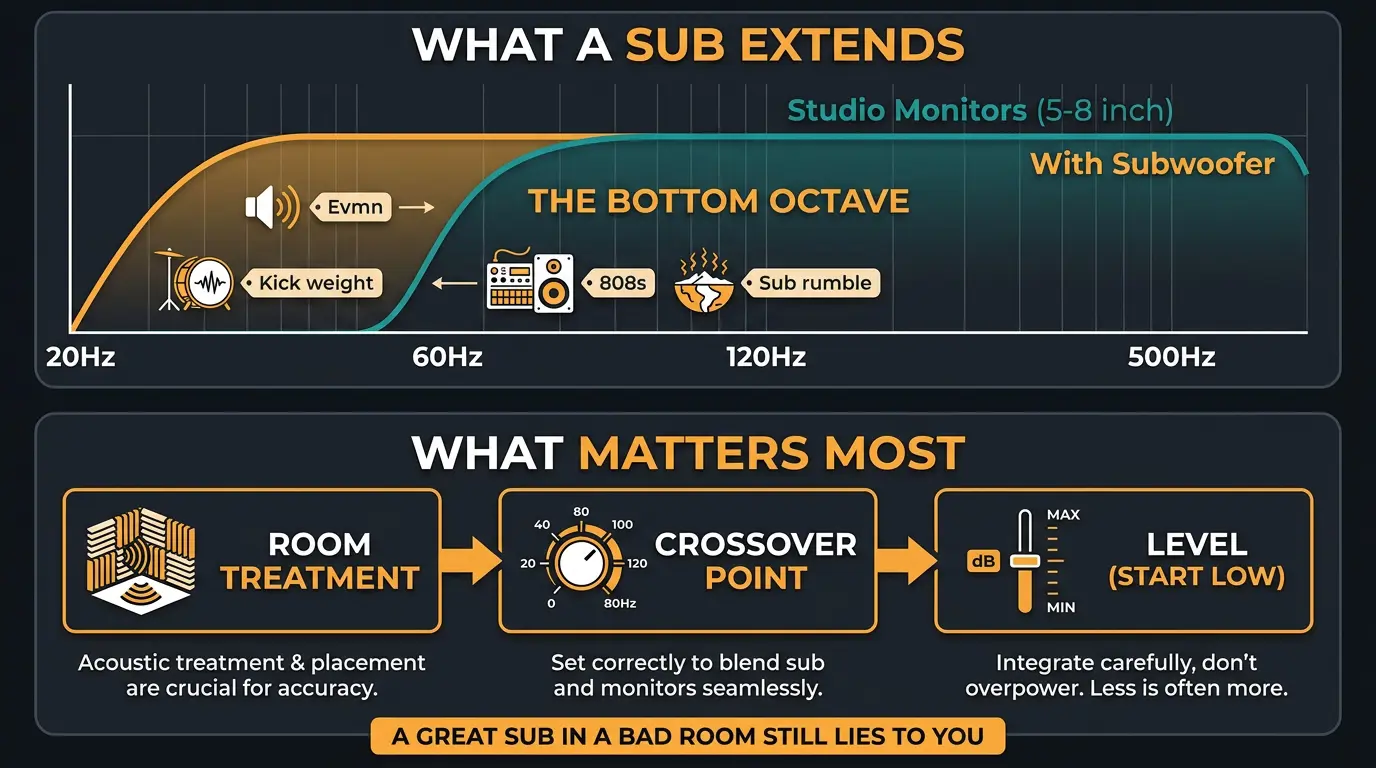
A sub extends your monitoring down below where most 5 to 8-inch monitors roll off. That's it. It's a window into the bottom octave so you stop guessing about kick weight, 808s, and the rumble that sneaks in when nobody's listening for it.
It is a monitoring tool, not a way to make your room thump for fun. If you crank it because it feels good, you'll start under-mixing your bass and wondering why everything sounds thin in the car.
The honest truth is the sub matters less than how you set it up. Room treatment, crossover point, and level do most of the work. A great sub in a bad room still lies to you. If you're not sure where your monitors fit into all this, our breakdown of near field versus far field monitors is a good companion read. Make sure you start with the level low and trust your ears from there.
How we picked these subs
- Tight and accurate over big and boomy. A sub that exaggerates the low end is worse than no sub at all.
- Sensible studio I/O and crossover controls, so it slots into a real monitoring chain instead of fighting it.
- Proven availability from real dealers, with honest notes where a model has changed names or runs low on stock.
JBL LSR310S 10-Inch Powered Studio Subwoofer
#1
Best Overall
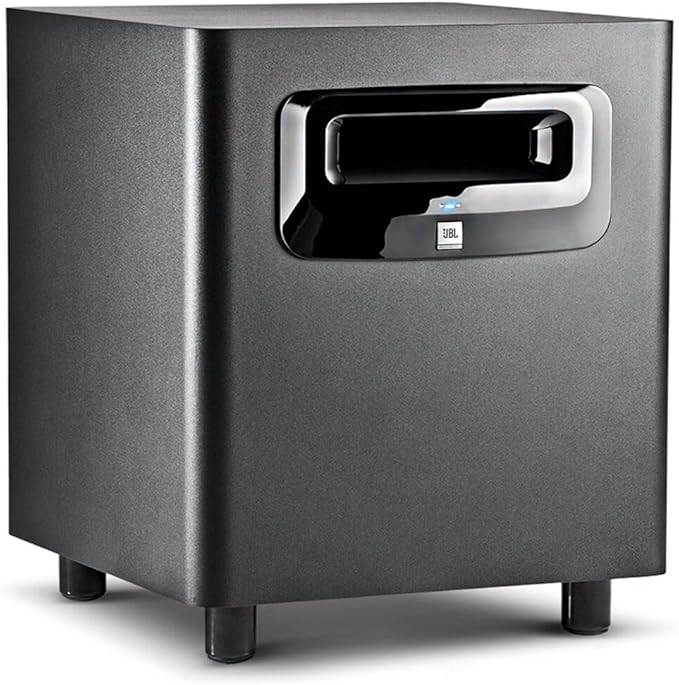
JBL LSR310S 10-Inch Powered Studio Subwoofer
The LSR310S is our overall pick because it does the boring stuff right. You get a 200-watt amp pushing a custom 10-inch down-firing driver, JBL's Slip Stream port for clean low extension, and the XLF Extended Low Frequency setting when you want to hear deeper. The bigger cone gives you real reach that the 8-inch subs here can't quite match.
The controls are studio-friendly too: balanced XLR in and out, a TRS input, and a selectable crossover so you can blend it with your mains instead of guessing. A scenario where this earns its spot is a small project room doing bass-heavy genres that genuinely need to hear down low. You can read the full spec sheet on JBL's official LSR310S page.
One honest note: JBL's own site stock can be hit or miss, so you might see back-in-stock signup language there. Third-party dealers stay well stocked, so check around.
Pros
- 10-inch driver gives real low-end reach the 8-inch picks can't match
- XLF setting and selectable crossover make it flexible in real rooms
- Balanced XLR in and out for a clean studio chain
Cons
- Bigger footprint than the 8-inch options here
- Stock on JBL's own site can be intermittent
Yamaha HS8S 8-Inch Powered Studio Subwoofer

#2
Runner-up
Yamaha HS8S 8-Inch Powered Studio Subwoofer
The HS8S is the no-drama choice. It's a 150-watt sub with an 8-inch cone, a 22 to 150Hz range, and the I/O you actually want: 2x XLR and 2x TRS/TS inputs, plus 2x XLR crossover outputs. Low cut, phase, and level controls round it out, so setting it up is quick.
It pairs naturally with the HS-series monitors, but it works with anything. A scenario where this fits perfectly is an HS5 or HS7 owner who wants matched low end without overthinking the blend.
Honest take: it doesn't have the deepest reach in this roundup, and it won't wow you with showy bass. That's kind of the point. It's flat, reliable, and easy to dial in.
Pros
- Flat and honest, with the Yamaha HS family's reference character
- Generous I/O with low cut, phase, and level controls
- Reliable and broadly in stock
Cons
- Less low-end extension than the 10-inch JBL
- Not the most exciting sound, by design
KRK S8.4 8-Inch Powered Studio Subwoofer

#3
Top Pick
KRK S8.4 8-Inch Powered Studio Subwoofer
The S8.4 is part of KRK's Generation 4 line, and it's built for punch. You get a Class-D amp at 109 watts driving an 8-inch woofer with a 1.5-inch voice coil, a 29 to 205Hz range, and a max SPL of 113dB. KRK's reputation here is tight, defined bass, and the S8.4 delivers that.
A scenario where it shines is a KRK Rokit owner who wants a matched, punchy sub for bass and hip-hop. The character lines up with the rest of the family, so you're not fighting two different sounds.
Honest availability note: it's a current product, but it can show as backordered at some dealers depending on when you look. Make sure you check stock before you count on it landing this week.
Pros
- Tight, defined, punchy bass that suits bass-heavy genres
- Matches the KRK Rokit family character
- Solid max SPL for its size
Cons
- Can show as backordered at some dealers
- Best paired with KRK monitors to keep the character consistent
Mackie CR8S-XBT 8-Inch Multimedia Subwoofer

#4
Top Pick
Mackie CR8S-XBT 8-Inch Multimedia Subwoofer
The CR8S-XBT is an 8-inch sub with Bluetooth and a handy desktop volume control. I'll be straight with you: this one is positioned as a multimedia and budget unit, not a precision studio reference. It's great for a desk that does double duty.
There's an important catch. The original CR8S-XBT has largely been phased out and replaced by a simpler sibling, the CR8SBT. So check which version is actually available before you buy, and don't assume the newer model is a straight upgrade. It's a cut-down design, not a premium one.
A scenario where it fits is a content or desktop setup that doubles as casual music monitoring. If you want a reference sub for serious mixing, look higher up this list.
Pros
- Bluetooth and a desktop volume knob make it easy to live with
- Fine for a multimedia or content desk that doubles as casual monitoring
Cons
- Positioned as multimedia, not a precision studio reference
- Original CR8S-XBT is largely phased out; the CR8SBT sibling is a cut-down replacement, not an upgrade
PreSonus Eris Sub 8 8-Inch Powered Studio Subwoofer
#5
Lowest Price
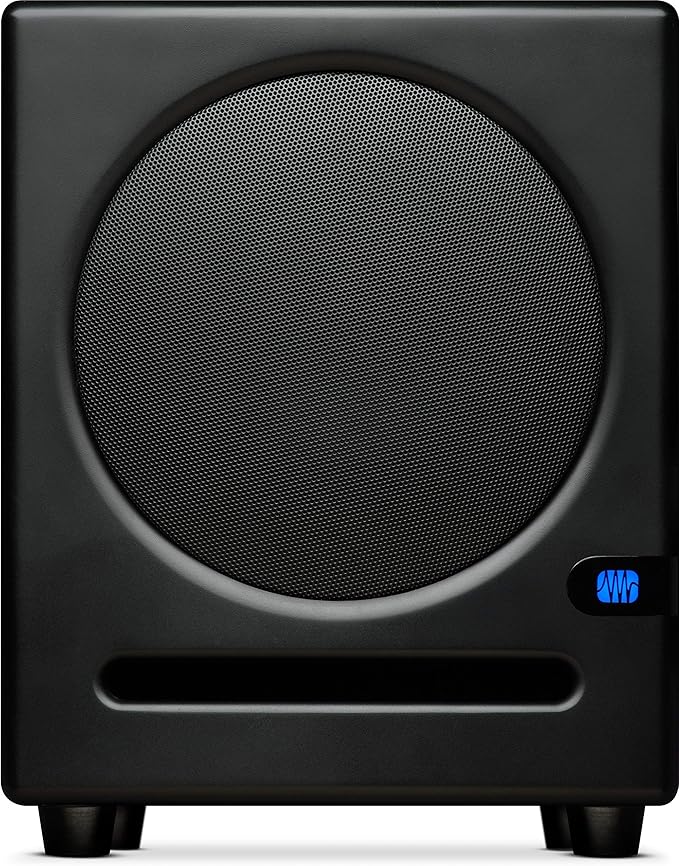
PreSonus Eris Sub 8 8-Inch Powered Studio Subwoofer
The Eris Sub 8 is a compact, front-firing 8-inch sub that reaches down to about 30Hz on roughly 100 watts. It's the easy entry point for adding low-end monitoring to a tight desk without the sub taking over the room.
Heads up on the model name: the plain Eris Sub 8 has been refreshed into the Bluetooth-equipped Eris Sub 8BT, so that's the current version you'll most likely find. Same generation of performance, just with Bluetooth bolted on. Make sure you're looking at the right one when you shop.
A scenario where it fits is a bedroom setup with Eris monitors that needs a little more reach. It won't rumble the floor, and honestly, for a small room that's a feature, not a flaw. If you're still building out the desk, our roundup of budget studio monitors pairs nicely with this one.
Pros
- Compact front-firing design that fits tight desks
- Reaches down to about 30Hz, plenty for a small room
- Easy entry point for adding low-end monitoring
Cons
- The plain Eris Sub 8 is superseded by the Eris Sub 8BT, so check the model
- Less output and reach than the larger picks
| Model | Driver / Power | Low Reach | Best For |
|---|---|---|---|
| JBL LSR310S | 10-inch / 200W | Deep, with XLF setting | Project rooms doing bass-heavy genres that need real reach |
| Yamaha HS8S | 8-inch / 150W | Down to 22Hz | HS-series owners who want matched, flat low end |
| KRK S8.4 | 8-inch / 109W | Down to 29Hz | KRK Rokit owners after tight, punchy bass |
| Mackie CR8S-XBT | 8-inch / multimedia | Multimedia-grade | Desktop and content setups doubling as casual monitoring |
| PreSonus Eris Sub 8 | 8-inch / ~100W | Down to 30Hz | Bedroom Eris setups adding a little reach |
Frequently Asked Questions (FAQs)
Do I actually need a subwoofer for mixing?
Not necessarily. A sub only helps if your room is treated enough to trust the low end it reveals. If you mix bass-heavy genres and your monitors roll off early, a sub gives you real information down low. If your room is untreated, fix that first.
How do I set the crossover and level so a sub doesn't muddy my mix?
Set the crossover where your monitors start rolling off, then bring the sub level up slowly until the low end feels even, not boomy. Less is more here. Walk around the room, check a few reference tracks, and trust your ears over any meter.
Will a subwoofer fix my low-end problems if my room is untreated?
No. An untreated room creates peaks and nulls that a sub will only make louder and more confusing. Bass traps and basic treatment do far more for your low end than any sub. Treat the room first, then add the sub to hear what's really there.
Is a 10-inch subwoofer always better than an 8-inch?
No. A 10-inch driver reaches deeper, but in a small or untreated room that extra low end can do more harm than good. An 8-inch sub is often the smarter call for tight desks and bedrooms. Match the sub to your room, not to the biggest number.
Should I worry about the model name changes on the Mackie and PreSonus picks?
Yes, check the model before buying. The Mackie CR8S-XBT was largely replaced by the cut-down CR8SBT, and the PreSonus Eris Sub 8 was refreshed into the Bluetooth-equipped Eris Sub 8BT. Confirm which version is actually in stock so you know exactly what you're getting.
Final Thoughts
If you want the most reach and the most flexible controls, the JBL LSR310S is the one I'd grab. The Yamaha HS8S is the safe, flat runner-up, the KRK S8.4 brings the punch for bass and hip-hop, and the PreSonus and Mackie options cover smaller desks. Just watch those model name changes before you check out.
And remember, a sub is a tool to hear better, not a bass boost. Treat your room, set the level low, and let your ears do the rest. While you're dialing in the rest of the setup, the right studio monitor stands matter just as much as the speakers sitting on them.
Some of the links within this article are affiliate links. These links are from various companies such as Amazon. This means if you click on any of these links and purchase the item or service, I will receive an affiliate commission. This is at no cost to you and the money gets invested back into Audio Sorcerer LLC.