This list ranks feel, not chops. Not who plays the fastest, not who stuffs the most notes into a fill. Feel — the thing that makes a groove sit so right you don't even notice the drummer, you just feel the song.
We judged this from the engineer's chair. That means four things: the pocket, where the hits land relative to the beat, how the kit was tuned, and how the drums were recorded. A great drum take is as much about where the note sits and how the shell was tuned as it is about what's played. You can hire the flashiest player alive and still get a track that fights the mix.
So no, you won't see a ranking based on blast beats or 30-second drum solos. You'll see the players whose groove changed records forever. Grab some headphones — a lot of this lives in the details. Here's the list.
TABLE OF CONTENTS
How we ranked feel instead of flash
Let's define the rubric plainly, because the words matter here.
Pocket is a consistent, tight groove that makes the whole band feel supported and locked in. It's not just playing in time. It's playing with intention so the bassist, the singer, everybody feels held up. You can't have a pocket without a groove.
Behind vs. ahead of the beat is where people get confused. Behind the beat is not dragging. At 90 bpm, every beat is still 666 milliseconds apart — the tempo never changes. The hits just consistently land 10 or 20 ms late inside that window. That's weight. That's not slowing down.
So two drummers can play the same beat at the same tempo and feel completely different. On top of the beat feels solid and confident. Behind it feels heavy, relaxed, deep. Ahead of it feels urgent and exciting. Different genres lean different ways — R&B, soul, and reggae tend to sit back, while rock and metal tend to push.
Then there's the recorded side. Kit tuning can make or break a track — a badly tuned kit means you're overprocessing or reaching for sample replacement before you've even started. Room sound and mic distance shape the feel as much as the player does. We ranked who nails all of this, not who plays fastest.
1. Bernard Purdie
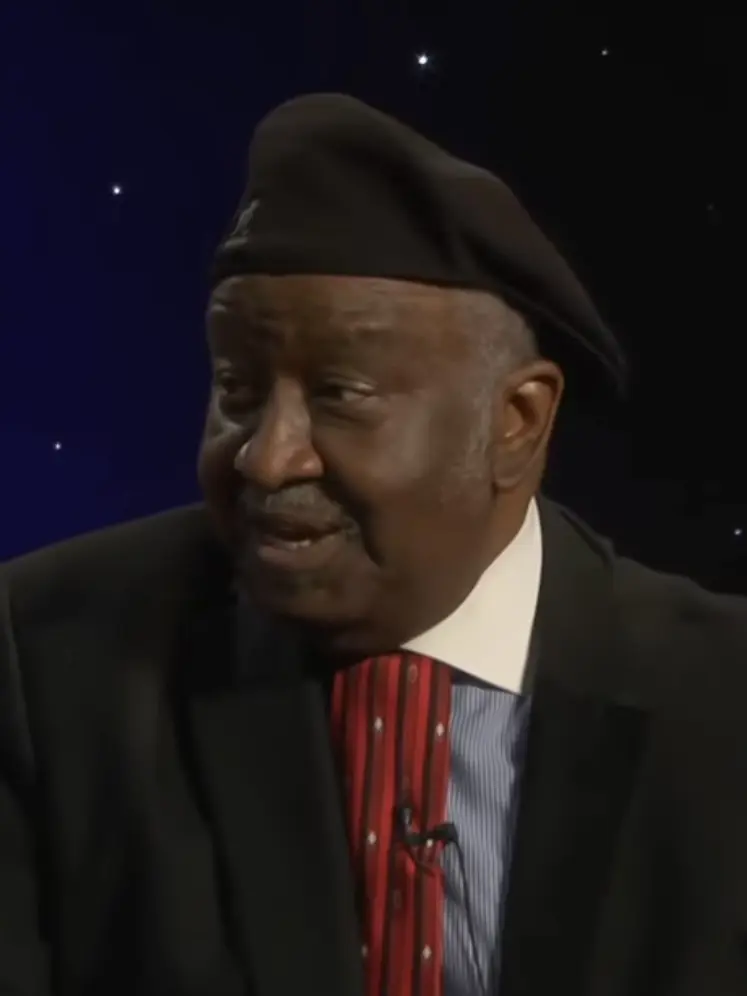
Bernard Purdie has played on over 4,000 albums, which makes him one of the most recorded drummers who has ever lived. He also invented the half-time Purdie Shuffle, and that groove alone would earn him a spot here.
What sets Purdie apart is how tight his pocket sits while his hi-hat work stays intricate underneath. The playing is complex, but it never sounds like work. It sounds effortless, which is the whole trick.
Let's give it a listen to Steely Dan's "Home at Last." That's the signature Purdie Shuffle, and it's a clinic in making something hard feel easy. The ghost notes breathe, the backbeat never wavers, and the hat rides through it all like it's on autopilot.
From the engineer's chair, this is a dream track. His articulation is so even and his ghost-note consistency so reliable that you get a clean, balanced snare the whole way through. You're not riding faders to catch stray loud hits or boosting weak ones. He hands you a track that mixes itself, and that consistency is exactly why he's number one.
2. Jeff Porcaro
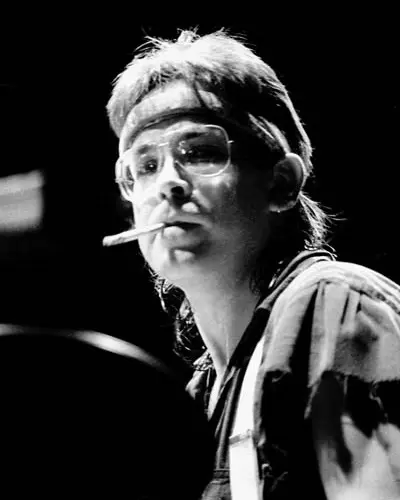
If you want the benchmark for studio feel, it's Jeff Porcaro. The man is widely called one of the greatest studio drummers of all time, and the Rosanna groove is a big reason why.
That half-time shuffle is a mashup. Porcaro built it from the Purdie Shuffle, Bonham's pattern on "Fool in the Rain," and the Bo Diddley beat, then stacked it with ghost notes. In a half-time groove the backbeat lands on beat 3 instead of 2 and 4, which is what gives it that laid-back, rolling feel. You can read the full breakdown of the Rosanna shuffle if you want the deep history.
From an engineer's angle, Porcaro is almost unfair. Every ghost note, every backbeat, every fill reads with absolute clarity and consistency. Nothing is buried, nothing jumps out at you. "Rosanna" is often cited as one of the best-mastered songs ever, and that starts at the source — you can't master a muddy take into that. He gave the mastering engineer a track that was already finished before it hit the console.
3. John Bonham
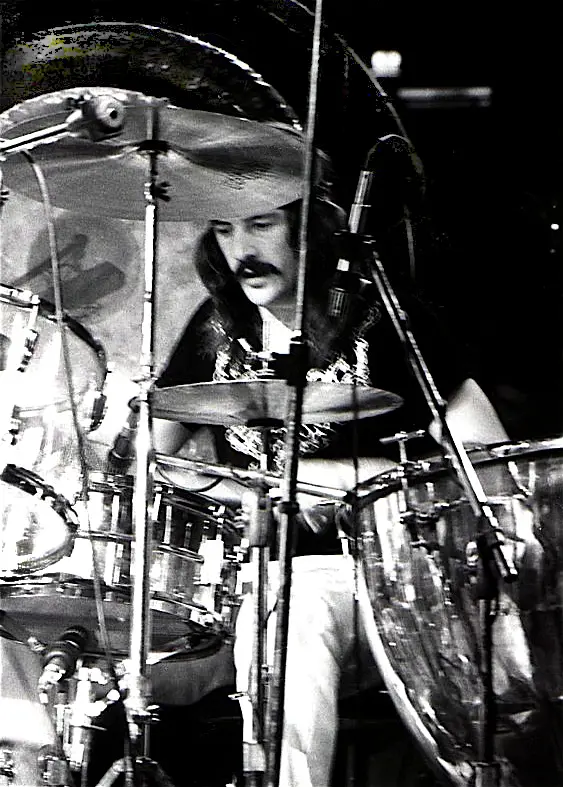
Bonham is the canonical recorded drum sound story, and it's worth telling right. "When the Levee Breaks" was cut at Headley Grange, with his Ludwig kit in a hard, reverberant stone stairwell.
Engineer Andy Johns and Jimmy Page hung two Beyerdynamic M160 ribbon mics from the second-floor banister, far above the kit. Because the mics were so far away in that reflective space, they caught the room instead of close detail. The signal was compressed hard and run through a Binson Echorec, and out came that enormous, cavernous thud nobody had heard on a record before.
Here's the principle for your own sessions: moving the mics away from the drums gives them room to breathe, and that's where a bigger sound comes from. Distance is a tone control.
And the groove itself? Dead simple, somewhere around 71 bpm. It's legendary for sound and feel, not complexity. Fair warning though — a lot of that magic was tied to that specific room, and even the band figured it'd be tough to recreate. Chase the principle, not the exact result.
4. Clyde Stubblefield
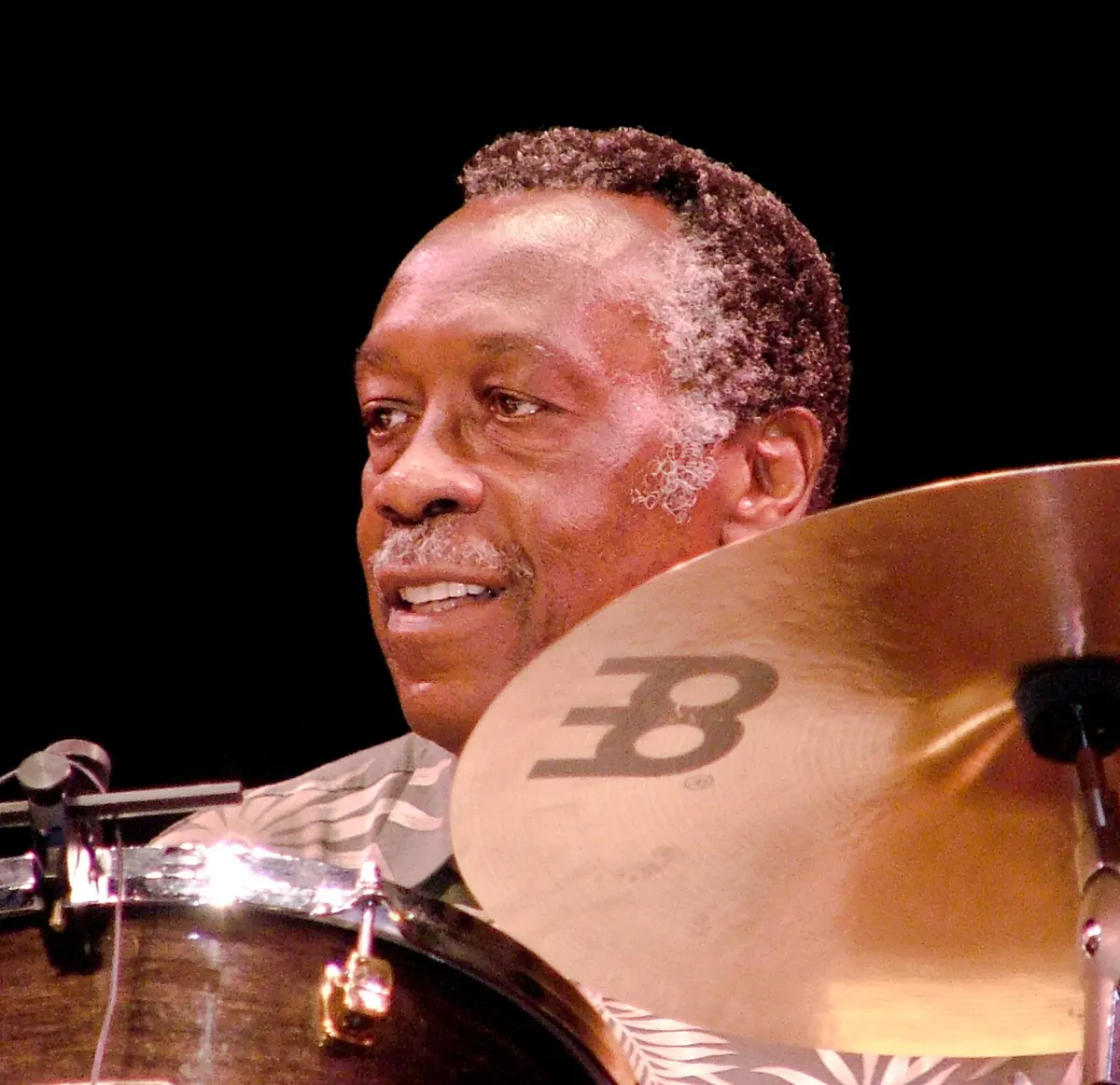
Clyde Stubblefield drummed for James Brown, and he played on "Cold Sweat" and "Funky Drummer" — the latter being one of the most-sampled grooves in the entire history of recorded music.
His feel is a deep, relentless funk pocket where the hi-hat and the ghost notes carry everything. The backbeat is there, but the real motion lives in all the quiet stuff happening between the big hits. It never lets up and it never rushes.
Here's the engineer's note on why that break samples so well. His dynamics are remarkably even, so when you chop a bar out and loop it, there's no awkward loud hit or dead-sounding one that gives away the seam. The groove holds its shape no matter where you cut it. That's not luck — that's a player with iron control over his touch, and it's the same reason producers have been building songs on top of him for decades.
5. Al Jackson Jr.
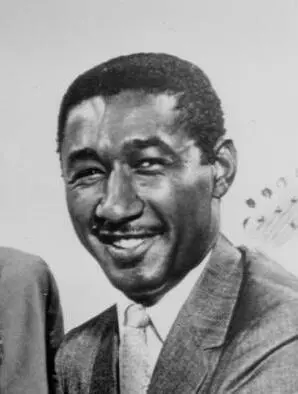
Al Jackson Jr. was the backbone of Stax and Booker T. & the M.G.'s, and they called him "The Human Timekeeper" for good reason.
His whole thing was the laid-back soul pocket — sitting just behind the beat to give those records a heavy, relaxed weight. This is the perfect example of the emotional map. He's not dragging, and the tempo never slips. The hits just land a hair late, and that tiny delay is what makes the music feel so settled and deep. Behind the beat conveys weight without ever feeling late. Jackson is the proof.
On the recording side, he's a lesson in restraint. His kit was dead simple and tuned to fit the song, not to show off. Nothing rings too long, nothing fights the vocal, nothing calls attention to itself. Less is more, and Jackson lived it. That's why those Stax records still sound so right — the drums serve everything else.
6. Steve Gadd
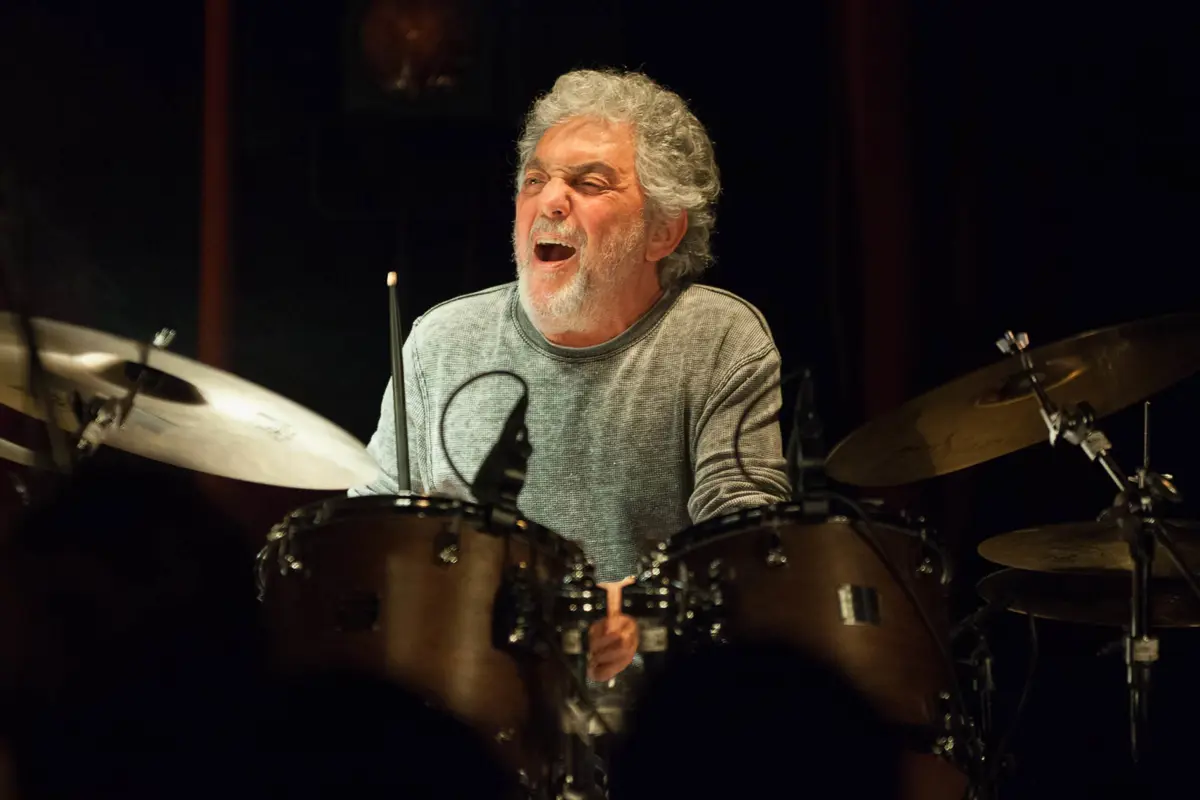
Steve Gadd's feel is so distinct that engineers can pick him out of a lineup blind. You hear a few bars and you just know.
The famous one is Paul Simon's "50 Ways to Leave Your Lover." That groove is built on an unshakable internal clock and tasteful ghost notes, and it's become one of those patterns every drummer eventually tries to copy. What makes it work isn't the notes so much as the placement — everything sits exactly where it needs to, every single bar.
From the engineer's chair, Gadd is almost boring in the best way. His tuning and his touch give you a balanced kit that needs close to nothing in the mix. The snare has body, the kick has weight, the toms are in tune with the kit. You set your levels, maybe add a touch of glue, and you're basically done. A player who shows up with a kit that sounds finished saves you hours. That's a professional.
7. Benny Benjamin
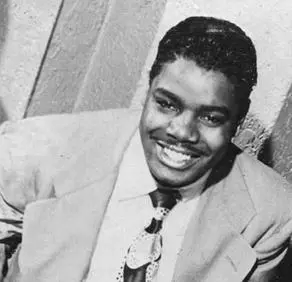
Benny Benjamin was the Funk Brothers' drummer, and he drove a staggering number of Motown hits out of that Detroit basement.
His pocket sat slightly ahead — urgent, pushing just a touch. That forward lean is a huge part of why those Motown records feel so alive. Remember the emotional map: ahead of the beat feels exciting. Benjamin leaned into that, and the result is music that pulls you along instead of waiting for you. The energy in those sides isn't an accident, it's placement.
On the recording side, his kit was tightly controlled and tuned to cut. Those records had to punch through mono AM car radios and tiny transistor speakers, so there was no room for a boomy, ringy kit that turned to mush on cheap playback. His drums were focused and present, built to survive the worst speakers in America. That's a drummer who understood the full chain, not just the room he was playing in.
8. Carlton Barrett
Carlton Barrett drummed for The Wailers and pioneered the one-drop, which puts him at the reggae end of the feel spectrum — the place where sitting back sometimes gets gloriously exaggerated.
The one-drop flips the usual expectation. Instead of a backbeat on 2 and 4, the emphasis lands on beat 3, with the kick and snare hitting together. Beat 1 drops out entirely, which is where the name comes from. That empty space is the whole feel. It's deep, relaxed, and totally unhurried, and Barrett defined it.
On the recording side, reggae lives in lower, fatter tunings with the ring kept under control. You don't want a bright, sustaining kit here — you want round and warm, with the resonance tamed so it doesn't wash into the next hit. That controlled, low tuning is what gives those grooves their fat, patient sound. Pair it with Barrett's placement and you get music that feels like it has all the time in the world.
9. Ringo Starr
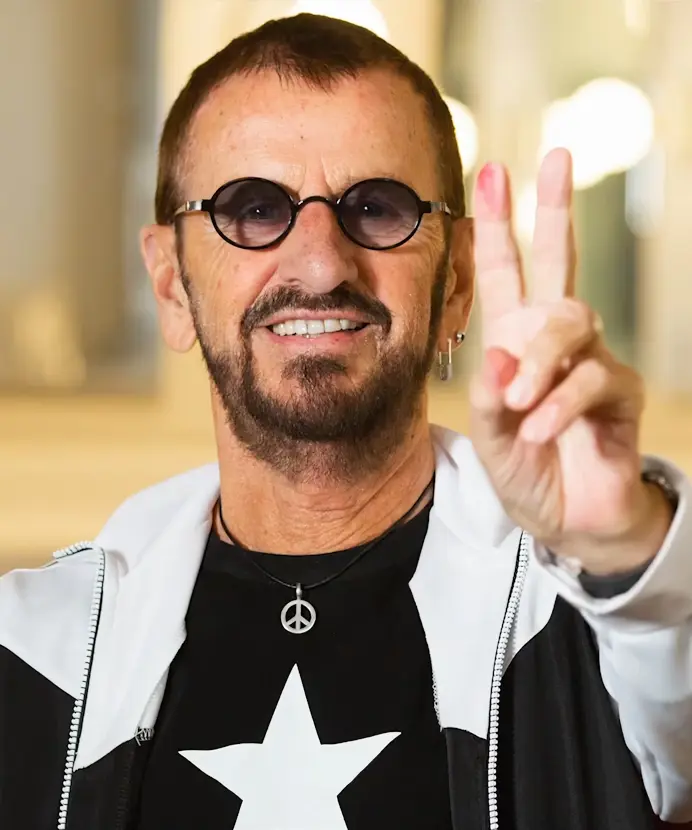
Here's the honest entry. Ringo Starr gets underrated by the chops-obsessed crowd all the time, and they've got it backwards. He's a feel monster.
His parts are song-first, always. The fills are distinctive and instantly recognizable, and his slightly loose timing serves the emotion instead of fighting it. "Come Together," "A Day in the Life," "Ticket to Ride" — those parts are inseparable from the songs now. Nobody else would have played them.
And this corrects a real misconception: technical flash is not the same as great drumming. Feel doesn't have to come from some intentional millisecond displacement. Sometimes it's just taste — knowing what to play and, more importantly, what to leave out. Ringo had that in spades.
On the later Beatles records his kit is warm and well-tuned, sitting perfectly in those dense arrangements without ever crowding them. That's the engineer's takeaway: a tasteful part on a good-sounding kit beats a flashy part on a bad one every time. It's not close.
10. Stewart Copeland
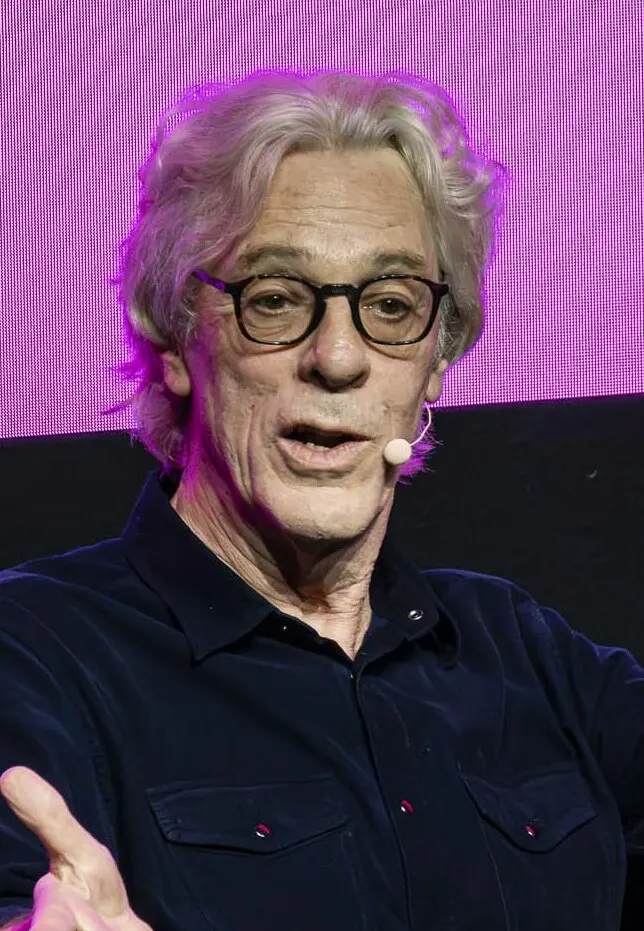
Stewart Copeland of The Police rounds out the list to make a point: pushing the beat is a feel choice, and a great one in the right hands.
His bright, forward hi-hat work and his on-top-or-ahead placement create constant urgency and air. Where Al Jackson Jr. relaxes, Copeland leans in. The whole vibe of The Police lives in the tension between his push and the band's pocket — it's restless and alive in a way a laid-back drummer never would have pulled off.
On the recording side, his snare was crisp and tuned high, and his kit was open and built to cut. That brightness isn't an accident; it matches the forward energy of his playing. A dull, fat kit would have killed the whole feel.
So end with this: there isn't one correct place to sit. Behind, on top, ahead — they're all right when they serve the song. Trust your ears, and if you care about tone the way these players did, you'll like our take on the greatest guitarists ranked by tone too.
Frequently Asked Questions (FAQs)
What does it mean for a drummer to play 'in the pocket'?
Playing in the pocket means locking into a consistent, tight groove that makes the whole band feel supported. It's not just playing in time — it's playing with intention so the groove feels solid and effortless. You can't have a pocket without a real groove underneath it.
Does playing behind the beat mean dragging or slowing down?
No. Playing behind the beat means every hit lands a few milliseconds late while the tempo stays exactly the same. At 90 bpm the beats are still 666 ms apart — the hits just sit consistently late inside that window. It feels heavy and relaxed, never late.
Who is considered the best drummer of all time?
There's no single answer, but for pure feel, Bernard Purdie tops a lot of lists — he's played on over 4,000 albums and invented the Purdie Shuffle. If you rank by groove and pocket rather than speed, players like Purdie, Jeff Porcaro, and John Bonham lead the conversation.
Why does kit tuning matter for the recorded drum sound?
Kit tuning can make or break a recording. A well-tuned kit gives you a balanced, usable track; a badly tuned one forces you into overprocessing or sample replacement before you've even started mixing. Good tuning at the source saves hours and almost always sounds more natural.
Does over-quantizing a drum track hurt the groove?
Yes, over-quantizing can kill the groove. Snapping every hit perfectly to the grid strips out the tiny timing variations that create feel and pocket. Keep some human looseness in there. The small deviations are the feel — remove them and the track sounds stiff and lifeless.
Final Thoughts
If there's one thing to take from this list, it's that feel is a real, learnable craft — part placement, part tuning, part taste. It's not magic. These players just understood where the note goes, how the kit should sound, and what to leave out.
So the next time you're cutting drums or editing a take, resist the urge to quantize the life out of it. Make sure you leave the pocket alone. Chase the sound at the source, trust your ears, and let the groove breathe.
Some of the links within this article are affiliate links. These links are from various companies such as Amazon. This means if you click on any of these links and purchase the item or service, I will receive an affiliate commission. This is at no cost to you and the money gets invested back into Audio Sorcerer LLC.